Les 5 Niyamas - discipline personnelle (Fr / En)

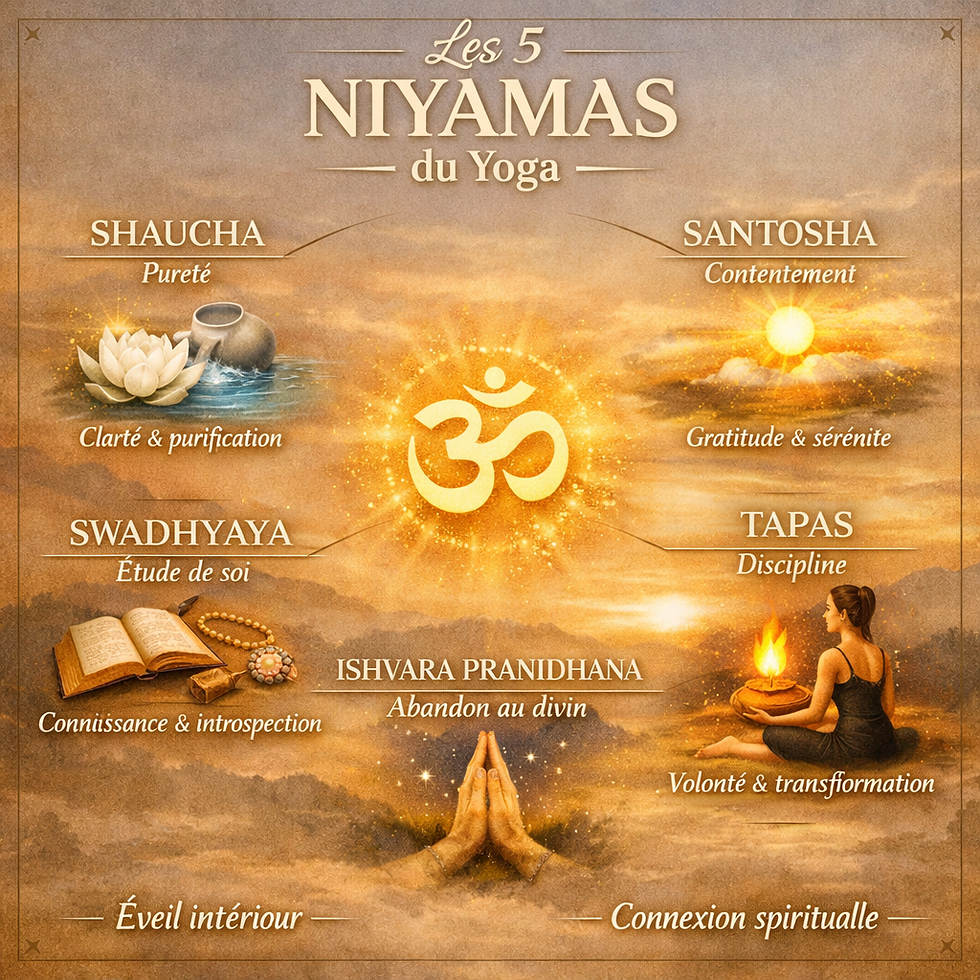
1. Shaucha – Pureté
Shaucha est la recherche de la clarté et de la pureté, à la fois dans le corps et dans l’esprit. Cela peut être une alimentation saine, une pratique de respiration, ou encore le choix de pensées positives. Purifier son espace intérieur et extérieur nous aide à accueillir la lumière et à vivre plus en harmonie.
2. Santosha – Contentement
Santosha est l’art d’être satisfait de ce qui est. Plutôt que de courir après ce qui manque, nous cultivons la gratitude pour ce que nous avons déjà. Le contentement ne signifie pas renoncer à évoluer, mais trouver la paix dans l’instant présent. C’est un état de joie simple et durable.
3. Tapas – Discipline
Tapas est la flamme intérieure qui nous pousse à persévérer. C’est la discipline qui nous aide à maintenir une pratique régulière, même quand la motivation faiblit. Chaque effort conscient est une étincelle qui nourrit notre transformation. Tapas nous rappelle que la constance est une clé vers l’évolution spirituelle.
4. Swadhyaya – Étude de soi
Swadhyaya est l’introspection et la connaissance de soi. Cela peut passer par la méditation, l’écriture, ou l’étude des textes spirituels. Observer nos pensées et nos comportements nous permet de mieux comprendre qui nous sommes et de progresser vers une sagesse plus profonde.
5. Ishvar Pranidhana – Abandon au divin
Ce principe nous invite à lâcher prise et à faire confiance à une force supérieure, qu’on l’appelle Dieu, l’univers ou la vie. Ishvar Pranidhana, c’est reconnaître que nous ne contrôlons pas tout et que l’abandon peut être une source de paix. C’est une invitation à vivre dans la confiance et la dévotion.
The 5 Niyamas – personal discipline
1. Shaucha – Purity
Shaucha is the practice of cleansing both body and mind. It is not limited to physical hygiene but extends to the purity of thoughts, emotions, and environment. By choosing nourishing food, practicing mindful breathing, and keeping our surroundings clean, we create clarity and lightness. Purity opens the door to a deeper connection with our true self.
2. Santosha – Contentment
Santosha teaches us to be satisfied with what we have and where we are. It is the art of gratitude and acceptance, reminding us that peace comes from within, not from external possessions or achievements. By embracing the present moment and cultivating joy in simplicity, we discover serenity and resilience.
3. Tapas – Discipline
Tapas is the fire of determination and perseverance. It is the inner strength that fuels transformation through consistent practice. Discipline does not mean rigidity; it is the conscious effort to align our actions with our higher purpose. Each small act of commitment — whether in yoga, meditation, or daily habits — becomes a spark that ignites growth.
4. Swadhyaya – Self‑study
Swadhyaya invites us to turn inward and explore our inner landscape. It is the practice of introspection, reflection, and study of sacred texts. By observing our thoughts and patterns, we gain awareness of who we are and how we evolve. Self‑study is a lifelong journey of learning, helping us align with our authentic nature.
5. Ishvara Pranidhana – Surrender to the Divine
The final Niyama is surrender — releasing control and trusting in a higher power. Ishvara Pranidhana teaches us humility and faith, reminding us that not everything is within our grasp. By letting go of fear and expectation, we open ourselves to grace, peace, and a deeper connection with the universe.



Commentaires